• Welcome to your new Gnomio site

    Now, you are in control!

    Moodle is an open-source Learning Management System (LMS) that provides educators with the tools and features to create and manage online courses. It allows educators to organize course materials, create quizzes and assignments, host discussion forums, and track student progress. Moodle is highly flexible and can be customized to meet the specific needs of different institutions and learning environments.

    Moodle supports both synchronous and asynchronous learning environments, enabling educators to host live webinars, video conferences, and chat sessions, as well as providing a variety of tools that support self-paced learning, including videos, interactive quizzes, and discussion forums. The platform also integrates with other tools and systems, such as Google Apps and plagiarism detection software, to provide a seamless learning experience.

    Moodle is widely used in educational institutions, including universities, K-12 schools, and corporate training programs. It is well-suited to online and blended learning environments and distance education programs. Additionally, Moodle's accessibility features make it a popular choice for learners with disabilities, ensuring that courses are inclusive and accessible to all learners.

    The Moodle community is an active group of users, developers, and educators who contribute to the platform's development and improvement. The community provides support, resources, and documentation for users, as well as a forum for sharing ideas and best practices. Moodle releases regular updates and improvements, ensuring that the platform remains up-to-date with the latest technologies and best practices.

    Links of interest:

    (You can edit or remove this text)

Available courses

Clothing Construction Theory is the study of the principles, techniques, and processes involved in assembling a garment from raw materials (fabric, notions, etc.) to a finished, wearable product. It provides the systematic knowledge base for the practical skill of sewing and manufacturing.


🏗️ Core Principles of Garment Assembly

The theory emphasizes several key principles that ensure the quality, fit, and durability of a garment:

1. Fit and Balance

  • Definition: The relationship of the garment to the body, ensuring it hangs correctly and allows for comfortable movement.

  • Theory: Achieving proper ease (the difference between body measurement and garment measurement), aligning grainlines , and ensuring the garment is on-balance so it doesn't pull, twist, or sag.

  • Key Concept: Darts and Seam Shaping are used to translate the three-dimensional curves of the body onto flat fabric pieces.

2. Sequence of Construction

  • Definition: The prescribed order in which garment sections must be sewn together for efficient and high-quality results.

  • Theory: Construction is almost always approached from the inside out and small components to large components. For example, pockets, collars, and cuffs are fully prepared before being attached to the main body pieces. This ensures accessibility for sewing and finishing.

3. Seam Technology

  • Definition: The methods used to join two or more pieces of fabric.

  • Theory: The selection of a seam type (e.g., plain, French, flat-felled) is based on the fabric type, the garment area (stress points), and the required finish.

    • Plain Seams are the most common.

    • French Seams enclose the raw edges for a neat finish on sheer or lightweight fabrics.

    • Flat-Felled Seams are highly durable and neat (common in jeans and workwear).

4. Pressing

  • Definition: Using heat, moisture, and pressure to permanently shape the fabric during construction.

  • Theory: Pressing is considered half of the construction process. "Pressing as you sew" sets stitches, blends seams, and creates smooth curves and sharp edges (like collars and lapels). Pressing should follow the grainline of the fabric to prevent stretching.


✂️ Key Construction Components

Interfacings and Underlinings

  • Interfacing: A layer applied to specific areas (collars, cuffs, waistbands, facings) to provide stability, shape retention, and body .

  • Underlining: A layer of fabric cut to the exact size of the main garment piece and treated as one, used to support delicate fabrics or make lightweight fabrics opaque.

Edge Finishes

  • Facings: Fabric pieces used to finish and support the raw edge of a garment (necklines, armholes), usually turned to the inside.

  • Hems: The method used to finish the bottom edge of a garment, such as turned-and-stitched, rolled, or blind hems.

Closures

  • Theory: Selection and application of functional closures (zippers, buttons, hooks, snaps) must be integrated into the construction sequence correctly and often require reinforcement (e.g., interfacing or backings) to withstand stress.

That is a massive and fascinating subject! Art and Design are two intrinsically linked yet distinct creative fields that shape our culture, environments, and functional objects.

Here is a structured overview of the key concepts, the differences between the two, and the fundamental tools they share.


🎨 The Difference Between Art and Design

While both require creativity, skill, and visual literacy, their primary objective is what separates them:

Feature Art (Fine Art) Design (Applied Art)
Primary Goal Expression and Evocation. To provoke thought, emotion, or self-expression. Functionality and Problem-Solving. To fulfill a specific need or brief for an end-user.
Constraints Generally Unconstrained (freedom of medium, subject, and form). Constrained by client needs, budget, user experience (UX), and technical limitations.
Success Metric Subjective. Measured by critical acclaim, emotional resonance, and cultural impact. Objective/Pragmatic. Measured by whether the design solves the original problem (e.g., is the logo recognizable? Is the chair comfortable?).
Output Usually Unique (a single painting, sculpture, etc.). Often intended for Reproduction and mass production (products, graphics, architecture).

Statement: Art asks a question or expresses a feeling; Design provides a functional answer to a pre-defined need.


🖼️ The Shared Language: Elements and Principles

Both disciplines rely on a shared foundation of visual vocabulary:

1. Elements of Art and Design (The Building Blocks)

These are the fundamental components used to create any visual work:

  • Line: A mark that connects two points, defining shape, movement, and form.

  • Shape: A two-dimensional, flat, enclosed area (geometric or organic).

  • Form: A three-dimensional object having height, width, and depth (e.g., sculpture, architecture).

  • Color: Derived from reflected light, defined by its Hue (the color name), Value (lightness/darkness), and Intensity (brightness/dullness).

  • Texture: The surface quality of a material, either actual (tactile) or implied (visual).

  • Value: The lightness or darkness of a color or shade.

  • Space: The area around or between elements, including positive (filled) and negative (empty) space.

2. Principles of Design (The Organizational Rules)

These govern how the elements are arranged to create an effective composition:

  • Balance: The visual weight of elements, ensuring stability (symmetrical, asymmetrical, or radial).

  • Contrast: The difference between elements (light/dark, rough/smooth, large/small) to create emphasis and interest.

  • Emphasis: Creating a focal point to draw the viewer's eye.

  • Movement: The path the viewer's eye follows through the work.

  • Pattern: The repetition of an element in a predictable manner.

  • Rhythm: The flow or sense of organized movement created by repetition of elements.

  • Unity/Variety: Ensuring all parts of the work fit together harmoniously (unity) while using differing elements to maintain interest (variety).


🌐 Contemporary Trends

In the modern world, the lines between art and design are often blurred, especially in areas like digital media and activism. Current trends include:

  • Technology Integration: The rise of AI-generated art and design, AR/VR (Augmented/Virtual Reality) experiences, and interactive installations.

  • Biophilic Design: Incorporating natural forms, materials, and systems into architecture, interior, and graphic design to connect humans with nature.

  • Activist/Advocacy Art: Art and design focusing on social justice, sustainability, and climate action, often using public spaces or digital platforms for maximum reach.

  • Tactility and Craft Revival: A counter-movement to the digital, emphasizing handwork, texture, and natural/sustainable materials.

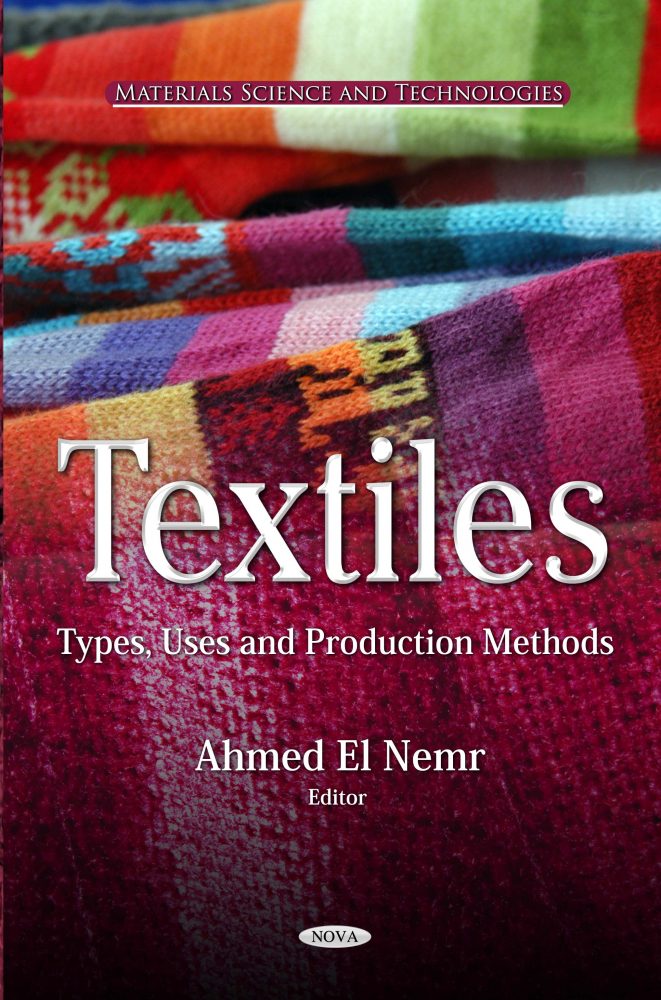
Textile Science is a multidisciplinary field that involves the detailed study of textile materials—from the raw fiber stage through processing, manufacturing, finishing, and ultimate end-use. It combines principles from chemistry, physics, engineering, and materials science to understand and predict the behavior and performance of fibers, yarns, and fabrics.


🔬 Key Areas of Study

Textile science is generally broken down into several interconnected components:

  • Fibers 🧶

    • Focus: The fundamental building blocks of all textiles.

    • Study: The structure (chemical and physical), properties (strength, elasticity, moisture absorbency, flammability), and classification of fibers.

    • Categories:

      • Natural: Derived from plants (e.g., cotton, flax, hemp) or animals (e.g., wool, silk).

      • Manufactured (Synthetic/Regenerated): Created from chemical compounds (e.g., polyester, nylon, spandex) or modified natural polymers (e.g., rayon).

  • Yarn Construction 🧵

    • Focus: The process of converting fibers into a continuous strand called yarn.

    • Study: Spinning methods, fiber alignment, the degree and direction of twist (S-twist or Z-twist), and how these factors influence the yarn's appearance, strength, and bulk.

    • Concepts: Yarn count (a measure of fineness) and different yarn types (simple, novelty, textured).

  • Fabric Formation 🟪

    • Focus: Converting yarns into two-dimensional fabric structures.

    • Study:

      • Weaving: Interlacing two sets of yarns (warp and weft) at right angles to create stable structures like plain, twill, and satin weaves .

      • Knitting: Interlooping yarns to create flexible, stretchy fabrics (weft and warp knitting).

      • Nonwovens: Bonding fibers mechanically, chemically, or thermally to form felted or disposable materials (e.g., medical masks, interlinings).

  • Coloration and Finishing 🎨

    • Focus: Treatments applied to fabrics to enhance their aesthetics and functional performance.

    • Study:

      • Dyeing/Printing: The chemistry of dyes, methods of color application, and colorfastness (resistance to fading).

      • Finishing: Chemical or mechanical treatments to modify properties like wrinkle resistance (durable press), water repellency, flame retardancy, or softness.


🧪 Importance and Applications

Textile science is vital because it provides the knowledge necessary to:

  1. Select the appropriate material for a specific end-use (e.g., high-performance synthetics for athletic wear versus breathable cotton for summer apparel).

  2. Develop innovative materials like smart textiles (fabrics that monitor vital signs or change temperature), antibacterial fabrics, and strong composites for industrial or medical use.

  3. Ensure Quality and Safety through textile testing (measuring tensile strength, abrasion resistance, and flammability).

  4. Promote Sustainability by researching the lifecycle of fibers, developing biodegradable alternatives, and creating low-impact dyeing processes.

Pattern drafting is a core process in fashion design and apparel production.


Definition and Purpose 📏

  • Pattern drafting is the technique of creating a two-dimensional paper template from which fabric pieces are cut to assemble a garment.

  • The primary purpose is to translate a three-dimensional body shape or design into a reproducible, flat blueprint.

  • The resulting template, or pattern, dictates the exact size, shape, and construction details of the final garment.


Fundamental Methods 🛠️

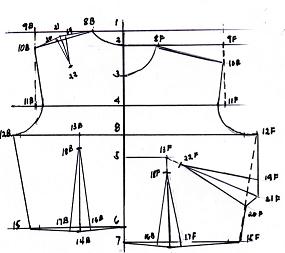
  • Flat pattern drafting involves generating patterns directly on paper using body measurements and geometric principles, often starting with a basic block or sloper.

  • Draping is a three-dimensional method where fabric is manipulated and pinned onto a dress form to establish the design, which is then transferred to paper to create the final pattern.

  • Computer-Aided Design (CAD) software allows for digital creation, modification, and grading of patterns, streamlining the industrial production process.


Key Components 📌

  • Every pattern piece includes essential construction markings such as the grainline, notches for alignment, fold lines, and seam allowances.

  • A sloper is a fundamental, non-styled pattern that fits the body closely, serving as the foundation for creating countless fashion styles through pattern manipulation.

  • Pattern manipulation involves techniques like pivot and slash-and-spread to move, eliminate, or redistribute dart fullness and introduce design elements like pleats, gathers, or flare.